A Professional Review of the Unicorn on Mushroom Design for Client Projects
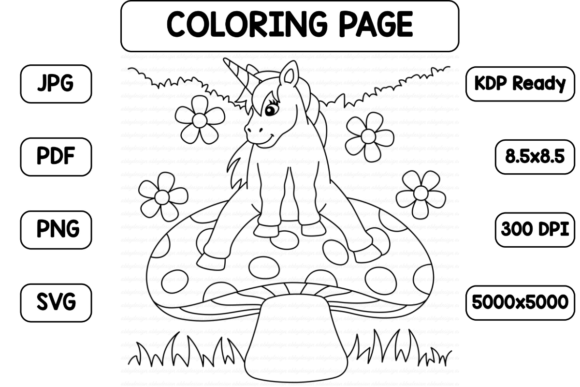
When a new design asset lands in my toolkit, my first question is always whether it can carry a client’s vision from concept to polished final product. Today, I’m examining the Unicorn Sitting on a Mushroom Coloring graphic. My initial impression is one of whimsical charm with a solid foundational structure. The scene—a unicorn perched atop a detailed mushroom—immediately evokes a sense of gentle fantasy. It’s not overly juvenile; it carries a soft, illustrative style that feels adaptable. This isn't just a coloring page for kids; it's a graphic design asset with potential for a range of creative design applications.
The Visual Mood and Where It Naturally Fits
The artwork creates a mood of magical serenity. The line work suggests a hand-drawn quality, making it feel authentic and approachable. This style naturally aligns with brands and projects that value warmth and narrative. I envision it working seamlessly for a handmade business, like an Etsy shop selling organic children’s products, a boutique offering herbal teas with whimsical packaging, or a local event like a fairy-tale themed festival. For a small business branding project aiming to connect with families or craft-conscious audiences, this asset could become a central visual theme.
Practical Performance in Real Design Situations
Let’s move from mood to mechanics. In practical application, this unicorn graphic performs well in several key areas. As a printable design, its clear outlines make it ideal for stickers, invitations, and posters. The inclusion of an SVG file means it’s fully scalable for larger formats like tote bags or mugs without quality loss. For digital sellers, the PNG with transparency is crucial for layering into website graphics, blog visuals, or digital ads without a harsh white background. I tested it in a product mockup for a hypothetical organic candle label—placing the unicorn as a decorative accent beside a clean sans-serif font—and it elevated the packaging design from generic to gently thematic.
Where This Asset Works Best and Where to Use Caution
Its strengths lie in being a hero graphic for themed collections or a supporting brand element in campaigns. It shines in large layout areas, like on a poster or as the focal point of a printable wall art piece. For social media graphics, particularly Instagram posts or Pinterest pins aiming for high engagement, its emotional appeal is a definite asset.
However, professional judgment requires noting where to apply caution. In small sizes, the intricate details of the mushroom and unicorn mane could become muddy, compromising readability. It would struggle on complex, crowded backgrounds where visual hierarchy is key. This design asset wouldn’t suit minimalist branding or stark, professional corporate materials. Its charm is specific; forcing it into a context that demands clean, austere visuals would undermine the project's professionalism.
Impact on Brand Consistency and Audience Engagement
Integrating an asset like this into a commercial design project affects several critical factors. For brand consistency, it can serve as a recognizable icon if used thoughtfully across product labels, marketing visuals, and editorial design. It builds visual trust with an audience seeking authenticity or a magical aesthetic. The emotional appeal is high, directly fostering engagement from a niche community. The overall impression, when paired with appropriate complementary elements like a subtle script font or earthy color palette, can feel cohesive and intentionally crafted, not just assembled.
Essential Designer Checks Before Client Use
Before I would ever commit this to a real client project, I run through a standard set of practical tests. First, I examine it in black and white to ensure the line weight holds up for potential stamp or engraving applications. Checking contrast on both light and dark backgrounds confirms the PNG transparency is clean and doesn’t leave ghost edges. Previewing it at various sizes—from a tiny logo detail to a full-scale sublimation design for a t-shirt—reveals its scalability limits. I always place it on real mockups: a mug, a book cover, a flyer.
The provision of multiple file formats (JPG, PDF, SVG, PNG) is a significant professional advantage. The SVG allows for vector editability, meaning I can adjust lines or separate elements if needed for a specific Cricut project or logo design adaptation. Crucially, I must confirm the commercial licensing terms. Using it for a client’s print-on-demand line or as part of a Canva template for their social media requires clear, commercial license permissions. This is non-negotiable for ethical and legal professional practice.
Final Thoughts on Its Role in the Creative Marketplace
The Unicorn Sitting on a Mushroom Coloring Page, as a digital product in the graphics category, transcends its simple description. For designers, brand owners, and content creators working in the creative marketplace, it represents a flexible illustration. It’s a clipart with character, a sublimation design ready for merchandise, a starting point for a sticker design series. Its value isn’t just in the image itself, but in how it can be deployed to improve a visual concept, support a design direction, and help a final result feel more polished and complete. When chosen for the right project—a small business launch, a seasonal campaign for a handmade brand, a decorative printable product—it becomes more than an asset; it becomes a part of the story the design is telling.