A Real-World Review of an Eel Coloring Page Graphics Asset
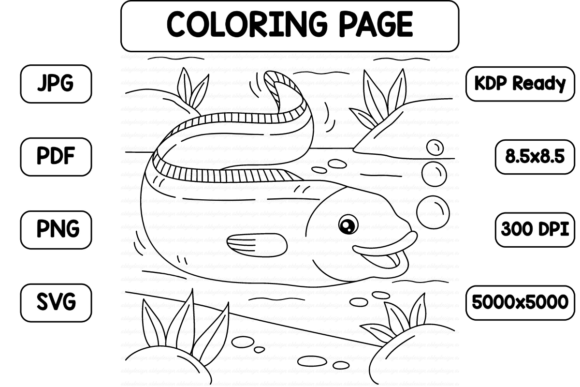
Let’s talk about this eel coloring page graphic from the perspective of someone running an online shop. When I evaluate a design asset for my digital product catalog, the first thing I look for is its mood and target audience. This particular eel illustration leans into a playful, cute, and slightly whimsical style. It’s not overly detailed, which makes it friendly for kids and toddlers, as intended. The visual personality is lighthearted, and it feels like it would attract parents, educators, and crafters looking for a fun, easy activity. Its niche appeal is clear: it sits comfortably within the world of children’s activities, ocean-themed collections, and simple, approachable art.
Initial Thoughts on Commercial Use and Product Fit
As a seller, my immediate question is: where can this asset be applied? The fact that it comes in four file formats—JPG, PDF, SVG, and PNG with a transparent background—opens up a lot of doors. This isn’t just a coloring page; it’s a versatile graphic design asset. I’m thinking about testing it across several product types before committing to a full listing.
For print-on-demand platforms like KDP, the PDF and high-res JPG are straightforward. But the SVG and PNG are the real keys to expansion. With those, I can envision this eel illustration transformed into SVG designs for Cricut projects—think sticker sheets, planner icons, or simple appliques. The PNG with transparency is perfect for dropping into Canva templates for birthday invitations, nursery wall art printables, or as clipart in a digital paper pack. It could become part of a sublimation design for a child’s t-shirt or a tote bag print. Even as a single graphic, its potential in product bundles is significant.
Testing the Asset Across Product Mockups
My next step in a real shop scenario is always a practical test. I would first create a series of mockup previews. How does the eel coloring page look as a thumbnail on Etsy or Creative Fabrica? Does it stand out in a sea of other listings? I’d preview it on both white and dark backgrounds to check contrast. For print products, a test print is essential—even if it’s just at home—to see how the lines hold up and if the coloring areas are clear.
Specifically for the SVG file, if I’m considering it for cut-ready products like stickers or scrapbooking kits, I need to inspect the SVG cut quality in my design software. Are the lines clean and continuous? Does it simplify well for a tiny sticker detail, or is it better suited for larger applications? This check prevents issues later with customer satisfaction.
Where This Eel Graphic Works Best
This design asset shines in certain applications. Its playful style is ideal for themed bundles—maybe an “Ocean Friends” collection with other sea creatures. It works well in large product previews where the cute detail is visible. As a printable design, it’s ready for digital downloads like coloring sheets or easy wall art. For merchandise graphics on items like mugs or tumbler wraps aimed at kids or ocean lovers, it adds a decorative, friendly touch.
It can significantly aid product presentation. Using it in listing images for a broader coloring page bundle creates visual storytelling and brand consistency. A clean, well-presented mockup featuring this eel can boost perceived value and customer trust. It could even be used in social media promos or blog graphics to market a larger collection, enhancing the overall click-through potential of my shop.
Potential Pitfalls and Areas for Careful Use
Every asset has limits, and a smart seller identifies them upfront. The simplicity of this eel coloring page means it should be used carefully in overly complex layouts where it might get lost. In crowded thumbnails, its appeal might diminish. I’d avoid using it on text-heavy templates where it could compete for attention.
Given its style, it might not be the best fit for products requiring ultra-clean, precise cutting lines for intricate Cricut or Silhouette projects, unless the SVG is verified to be perfectly optimized. It’s likely more suited to larger-cut items. Also, on very dark backgrounds without a slight adjustment, the lines might not have enough contrast. Testing for this is a key part of my pre-publishing checklist.
Practical Seller Notes for Integration
Before I list any product using this graphic, I have a short list of actionable steps. First, confirm the commercial licensing terms—always. Then, organize the files clearly for customers; if I’m bundling it, I need to provide them in a logical structure.
Pairing the graphic with complementary fonts can elevate a template product. I’d test it with a friendly handwritten font for a kids’ activity sheet, a clean sans serif for a modern nursery print, and perhaps a playful display font for a t-shirt design mockup. This helps assess its versatility.
Finally, I consider its role in a larger collection. Could this eel coloring page be the start of a “Underwater Adventure” series? Does it fit with my existing brand identity for a handmade business or small business branding? Its success often depends on how well it integrates into a cohesive visual hierarchy across my entire shop.
The Final Assessment for a Digital Product Creator
From a business-minded perspective, this eel coloring page for kids and toddlers is a solid, versatile graphic design asset. Its strength lies in its multi-format delivery and its clear, niche-friendly style. It’s not a hype-driven product; it’s a practical tool. It can support a more professional-looking online product collection by serving as a reliable element in bundles, merchandise graphics, and printable designs.
The key to using it successfully is the same as with any digital product: test it thoroughly in real-world applications. Preview it as a marketplace thumbnail, check the PNG transparency in a mockup, verify the SVG in design software, and see how it prints. By doing that, a seller can confidently deploy it across Etsy products, Canva templates, or print-on-demand offerings, knowing exactly where it adds value and where it might not. In the end, it’s about building a catalog of dependable design assets that meet real customer needs, and this asset has a definite place in that ecosystem.