Bear Clipart: A Designer's Review for Real Client Projects
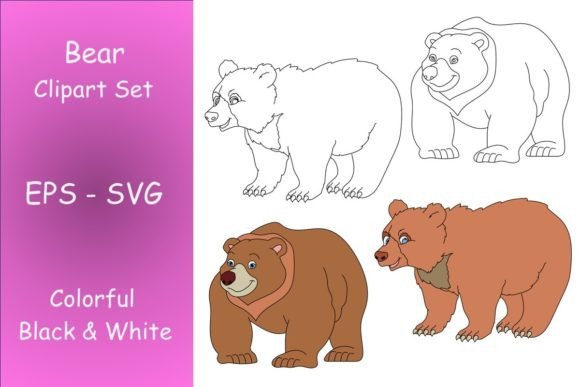
When I open a new clipart set for a client review, my first questions are always about style and mood. The Bear Clipart Collection. Wild Animals immediately struck me with its warm, approachable character. This isn't a hyper-realistic wildlife illustration; it's a charming, slightly playful interpretation. The bears have a soft, hand-drawn quality that feels inviting rather than intimidating. The style leans towards modern craft—perfect for projects that need a touch of wilderness without the severity of a scientific drawing.
The Right Project Atmosphere for These Bear Graphics
This collection creates a mood of friendly adventure. It’s ideal for clients whose branding needs to feel authentic and warm, not corporate and cold. I picture it working beautifully for a handmade soap company with a “forest fresh” line, a children’s educational publisher, a local zoo’s summer event campaign, or an Etsy shop selling nature-themed nursery decor. It fits that space where crafts and commercial design overlap—projects that require professional polish but also a relatable, heartfelt aesthetic.
Where This Asset Excels in Practical Application
In real-world design work, these bear illustrations perform strongly in specific roles. For large layout areas, like a poster for a boutique camping gear shop or a hero graphic for a wildlife nonprofit’s website, they provide a focal point with enough detail to be engaging at scale. They are superb as decorative accents on product labels for honey, maple syrup, or other natural goods. In social media graphics, especially Instagram posts or Pinterest pins for a seasonal “back to nature” campaign, they add instant thematic clarity.
Consider these successful applications:
- Printable Designs: Wall art for a child’s room, activity sheets, or invitations for a woodland-themed birthday party.
- Product Mockups: Applied to t-shirt designs, tote bags, or mugs for a print-on-demand store. The style translates well to sublimation.
- Supporting Brand Elements: Not as a primary logo, but as a secondary illustrative mark on a website’s “About Us” page or within a brand’s pattern for packaging details.
- Cricut Projects: Cutting as standalone stickers or layered vinyl designs for handmade crafts.
Caution Areas: When to Use These Bears Carefully
Every design asset has limits, and professional judgment means knowing them. The Bear Clipart Collection. Wild Animals, with its softer lines and details, should be used carefully in very small sizes. On a business card or as a tiny icon in a crowded footer, the details may become lost, muddying the visual hierarchy. It may clash with overly complex backgrounds; it needs clean space to shine. For projects demanding stark minimalism or a strictly corporate feel—like a financial institution’s report—this style would be inappropriate. The emotional appeal is warm and niche, not broad and neutral.
Testing the Asset in Real Design Scenarios
Before committing this to a client’s brand identity, I run practical tests. First, I view the graphics in black and white to ensure the forms hold up without color dependency. I place them on both light and dark backgrounds to check contrast. I preview them at 50px and 500px to understand scalability. Crucially, I drop them into actual product mockups—a t-shirt template, a mug, a book cover—to see how they integrate with other elements.
A key step is font pairing. I test the bears alongside a clean sans-serif font for modern marketing visuals, a serif for editorial design like blog visuals, and a playful script for invitations. The bears pair well with fonts that have a similar handmade character, maintaining brand consistency. Finally, I always confirm the commercial license explicitly. Using a graphic design asset for a client’s small business branding without clear licensing is a professional risk I cannot take.
The Impact on Final Design Quality and Audience
Integrating this clipart set thoughtfully can elevate a project’s polish. It provides a cohesive visual theme for a themed collection, like a series of digital ads for a zoo’s new exhibit. It builds visual trust by feeling intentional and professionally sourced, not hastily cobbled together. For audiences drawn to nature, crafts, or family-friendly content, it boosts emotional appeal and engagement.
However, the overall impression hinges on context. On a beautifully designed packaging design for artisan goods, it enhances the handmade business vibe. On a low-contrast, busy flyer, it could contribute to a cluttered, amateur feel. The asset is a tool; the designer’s application determines the outcome.
A Designer’s Final Verdict for Client Work
The Bear Clipart Collection. Wild Animals is a valuable digital product for specific client niches. Its strength lies in projects that celebrate nature, craft, and warmth. For a designer preparing a visual concept for a local wildlife event, an Etsy shop launch, or a seasonal campaign centered on adventure, this set can efficiently support the design direction. It offers ready-made personality, saving illustration time while adding a polished, thematic element.
My recommendation is to use it as a design asset within a broader, well-structured layout. Let it be a star on a poster or a charming accent on a label, but ensure it doesn’t overwhelm the essential information. Check the provided file formats—SVG design for editability and scaling, PNG design with clean transparency for digital ads—and test a small print to confirm quality. In the right project, for the right client, this collection will help the final result feel cohesive, engaging, and professionally crafted.